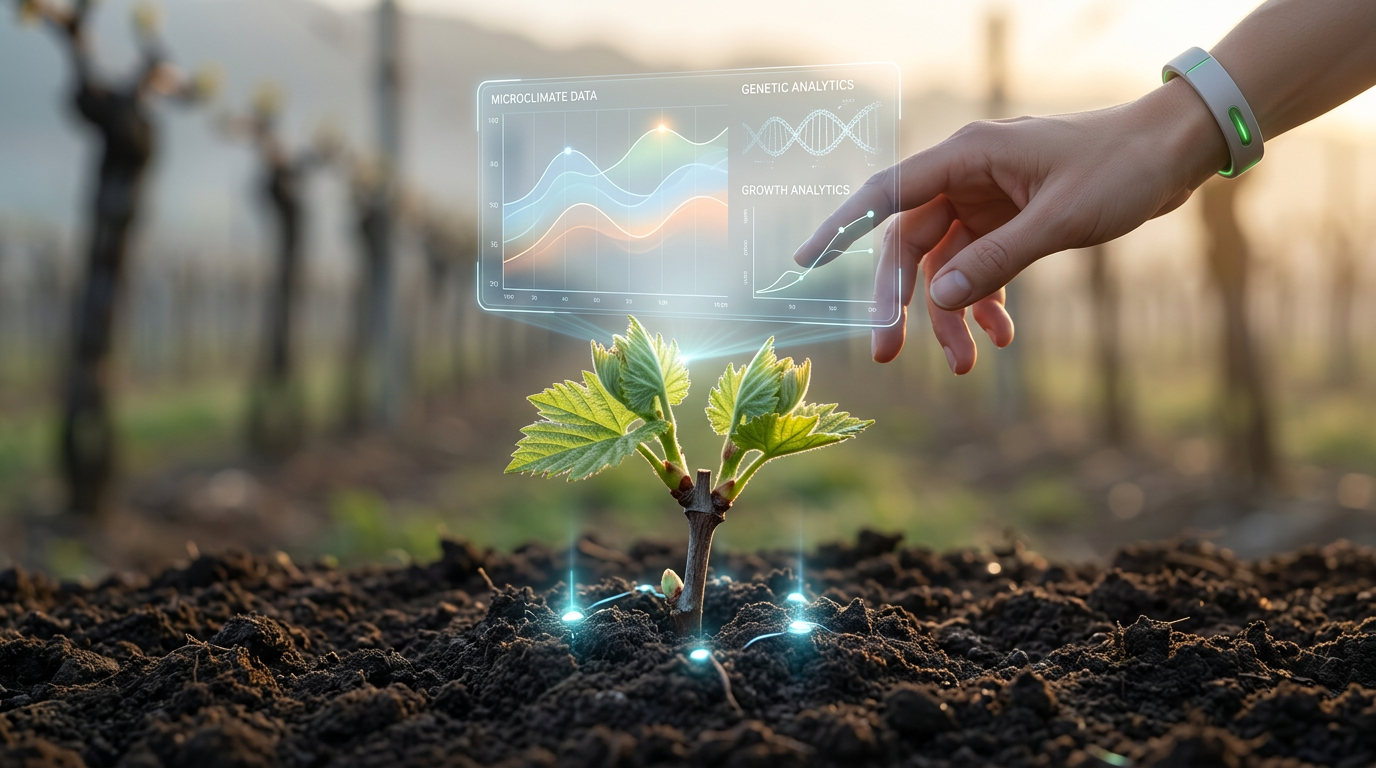
Quantum Terroir: Unlocking the Subatomic Secrets of Wine's Sense of Place in 2026
In 2026, the concept of quantum terroir wine is revolutionizing viticulture and enology, delving into subatomic interactions that shape a wine's character. This cutting-edge exploration moves beyond traditional environmental factors, offering a new perspective on the intricate relationship between a wine's origin and its unique profile.

Quantum Terroir: Unlocking the Subatomic Secrets of Wine's Sense of Place in 2026
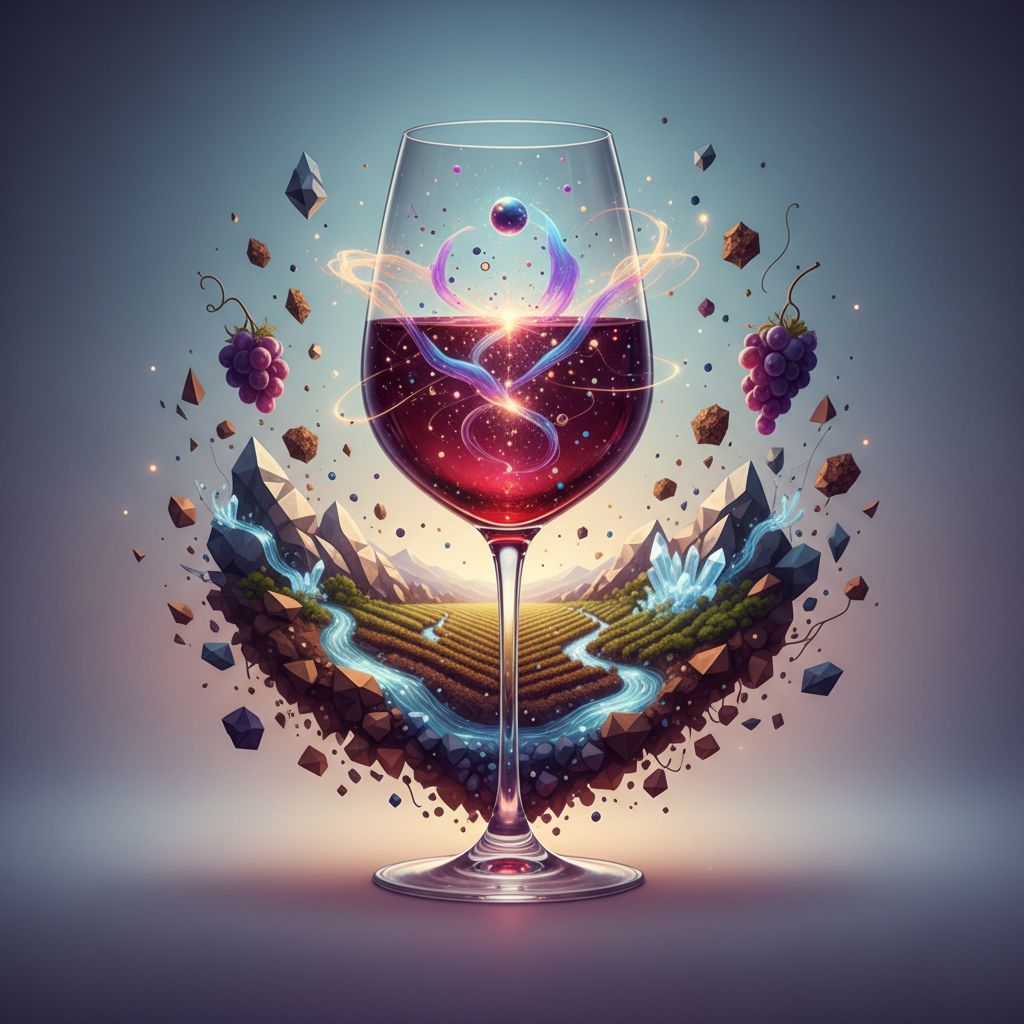
In the evolving world of viticulture and enology, the concept of quantum terroir wine is emerging as a fascinating frontier, pushing the boundaries of how we understand the intricate relationship between a wine's origin and its ultimate character. As we stand in 2026, this cutting-edge exploration delves beyond conventional environmental factors, proposing that even subatomic interactions within the vineyard ecosystem could influence the profound sense of place we experience in a glass of wine. This article will unravel the mysteries behind this revolutionary idea, examining how quantum principles might contribute to the unique identity of wines from specific locales.
For a deeper dive into how subtle elements can define wine, explore The Art of the 'Invisible' Hand: The Unseen Influence of Human Factors on Terroir and 2026's Wine Identity.
Understanding the Foundations of Quantum Terroir Wine
The traditional understanding of terroir encompasses geology, climate, topography, and human practices. These elements collectively shape the grape and, consequently, the wine. However, the idea of quantum terroir wine suggests a deeper, more subtle layer of influence. It posits that at the microscopic and even subatomic levels, environmental energies and particle interactions could leave an indelible mark on the vine's development and the wine's chemical composition.
Researchers in 2026 are exploring theories that involve quantum entanglement, vibrational frequencies, and even the subtle electromagnetic fields within a vineyard. These aren't just abstract ideas; they are potential avenues for explaining nuances in wine that traditional analysis struggles to fully capture. The subtle dance of particles, the energy signatures of specific soils, and the interaction with cosmic forces might all play a role.
Consider how the Art of the Soil Microbe: Unseen Architects of Terroir and Wine Complexity in 2026 already hints at the unseen forces at play in a vineyard.
The Role of Vibrational Frequencies in Terroir
- Soil Microorganism Activity: The microbiome of the soil is known to be crucial. Quantum terroir theory suggests that the unique vibrational frequencies of these microorganisms, influenced by the soil's mineral composition, could subtly alter nutrient uptake and metabolic pathways in the vine.
- Water Memory and Structure: Water, essential for life, is a highly complex molecule. Some theories propose that water retains a "memory" of its environment through specific quantum structures or vibrational patterns, directly impacting the vine's hydration and the resulting grape's chemistry.
- Solar and Cosmic Influences: Beyond visible light, the vine is constantly exposed to a spectrum of electromagnetic radiation and cosmic particles. The quantum terroir hypothesis considers how these subtle energy inputs might interact with cellular processes at a fundamental level.
The Scientific Exploration of Quantum Terroir Wine in 2026
While still largely theoretical, the concept of quantum terroir wine is gaining traction in interdisciplinary scientific circles. Advances in spectroscopy, quantum chemistry, and high-precision analytical techniques in 2026 are providing tools to investigate these intricate phenomena. The goal is to move beyond mere correlation and identify causal links between quantum-level interactions and perceptible wine characteristics.
One area of focus is the study of biophotons – ultra-weak photon emissions from biological systems. Could the specific biophotonic output of a vine, influenced by its environment, contribute to the unique signature of a quantum terroir wine? This type of research represents a paradigm shift from purely chemical analysis to a more holistic, energetic understanding of viticulture.
For more on the cutting-edge science behind wine flavor, check out The Quantum Palate: Deconstructing the Science of Flavor Perception in Wine for 2026.
Advanced Analytical Techniques
- Quantum Spectroscopy: New spectroscopic methods can detect minute differences in molecular structures and vibrational states, potentially revealing quantum imprints in wine samples.
- Bioinformatics and Data Science: Powerful algorithms are being employed to analyze vast datasets, looking for patterns that correlate vineyard quantum properties with specific wine flavor profiles and chemical markers.
- Controlled Environment Studies: Experiments involving vines grown under precisely controlled electromagnetic fields or with specific isotopic water compositions are underway to isolate and measure quantum effects.
Implications for Winemaking and Appreciation of Quantum Terroir Wine
If the principles of quantum terroir wine are proven, the implications for viticulture and enology would be profound. Winemakers might adopt new practices aimed at optimizing these subtle energy interactions, while wine enthusiasts would gain an entirely new vocabulary and framework for appreciating the depth and complexity of their favorite vintages.
Imagine viticultural strategies that focus not just on soil nutrients but also on promoting specific vibrational frequencies within the vineyard. Picture wine ratings that include an assessment of a wine's "quantum signature." This could fundamentally alter how we select vineyard sites, cultivate vines, and even store and age wine, striving to preserve or enhance these subtle energetic qualities.
This innovative approach aligns with broader trends in viticulture, such as those discussed in The Art of the Winemaker's Palette: Sculpting Flavor with Indigenous Yeast and Minimal Intervention in 2026, where natural processes are increasingly understood and leveraged.
Future of Viticulture and Enology
The pursuit of quantum terroir wine invites us to rethink our entire approach to wine creation. This bold perspective could lead to:
- New vineyard management techniques focusing on subtle energy fields and biodiversity at a microscopic level.
- Innovative wine aging methods designed to interact with and enhance quantum properties.
- A deeper, more holistic understanding of wine character, moving beyond simple chemical compounds.
Connecting Quantum Terroir with Sensory Experience
Ultimately, the goal of understanding quantum terroir wine is to deepen our appreciation of the sensory experience. While science can offer explanations, the taste, aroma, and mouthfeel of wine remain intensely personal and subjective. Could the subtle quantum influences described create nuances that resonate with our own biological systems, contributing to that ineffable quality we call "sense of place"?
The human palate is incredibly sophisticated, capable of discerning tiny differences in taste and aroma. It's plausible that our sensory organs are sensitive to more than just the macro-chemical composition of wine. Perhaps the "magic" of a truly exceptional terroir wine lies not just in its well-understood chemical profiles, but also in these subtle, energetic signatures that the quantum terroir theory seeks to unveil. As we move through 2026 and beyond, this area promises to enrich both the scientific and experiential dimensions of wine. More information on the subtle, often overlooked factors in wine appreciation can be found through resources like the Wine & Spirit Education Trust (WSET).
Written by
Juniper Thorne is an experienced writer and educator with a deep passion for the world of wine. Bringing expertise in sensory analysis and wine culture to the Greatest Wine platform, Juniper helps readers explore and appreciate every nuance of wine.
Related Articles
The Cellar Architects: Mastering Elite Wine Preservation and Evolution in 2026
For the true connoisseur, wine is more than just a beverage; it's a living entity, an investment, and a passion. Mastering its preservation and evolution is an art form, especially in 2026 with new technologies and insights. Learn how to protect and enhance your cherished collection.
Juniper Thorne