The Art of the 'Vinous Nebula': Deconstructing the Cosmic Influences on Terroir in 2026
In 2026, the world of viticulture is exploring new frontiers. Beyond traditional soil and climate factors, experts are deconstructing the 'Vinous Nebula' – the idea that celestial influences contribute to 'cosmic terroir'. This intriguing concept suggests that cosmic forces play a subtle yet significant role in shaping the character and complexity of fine wines. Join us as we delve into this exciting new perspective and its implications for discerning wine enthusiasts and producers alike.

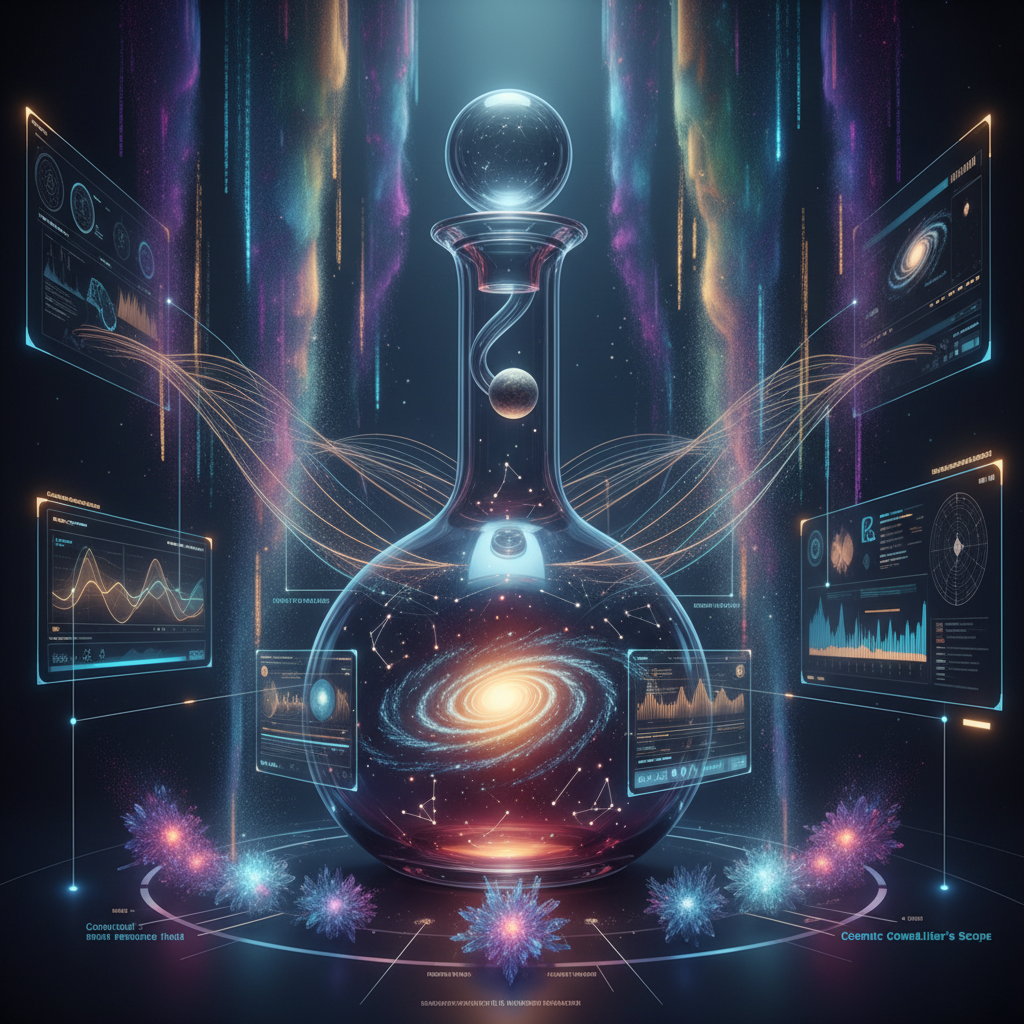
The Art of the 'Vinous Nebula': Deconstructing the Cosmic Terroir in 2026
In the vast and intricate world of viticulture, discerning wine enthusiasts and producers are continually seeking deeper understandings of what shapes the character of a noble vintage. Beyond the conventional wisdom of soil, climate, and topography, a new frontier of inquiry posits that celestial influences, in a concept termed cosmic terroir, might play a subtle yet significant role. As we move into 2026, this fascinating interplay between the terrestrial and the extraterrestrial is gaining traction among those eager to explore every facet of wine's profound complexity.
For a complementary perspective, consider delving into Quantum Terroir: Unlocking the Subatomic Secrets of Wine's Sense of Place in 2026.
Understanding the Concept of Cosmic Terroir
The term "terroir" traditionally encompasses the unique environmental factors that affect a crop's phenotype, including soil, topography, and climate. However, cosmic terroir extends this definition to include influences from beyond our planet, such as lunar cycles, planetary alignments, and even solar activity. While seemingly esoteric, proponents suggest these forces could subtly impact plant growth, sap flow, and ultimately, the aromatic and textural development of grapes. This exploration of cosmic terroir offers a fresh perspective on winemaking.
This isn't about astrology in the conventional sense, but rather a scientific exploration of how subtle gravitational pulls, electromagnetic fields, and solar radiation might interact with the intricate biological processes of Vitis vinifera. The discussion often focuses on quantifiable effects on plant physiology. To understand how even micro-climates contribute to wine's identity, explore The Art of the Sommelier's Sixth Sense: Anticipating the Unseen Impact of Micro-Climates on 2026 Vintages.
Historical Precedents and Biodynamic Connections
- Ancient Agricultural Practices: Many ancient civilizations aligned their planting and harvesting schedules with lunar and cosmic calendars, believing in their influence on crop vitality and yield. Interested in historical context? Read about The Art of the 'Vinous Archaeologist': Unearthing and Reinterpreting Ancient Wine Production for 2026.
- Biodynamic Viticulture: Modern biodynamic approaches, pioneered by Rudolf Steiner, explicitly incorporate celestial rhythms into vineyard management. This often includes specific planting, pruning, and harvesting days based on moon phases and planetary positions. While not directly stating "cosmic terroir," it inherently acknowledges these broader influences.
- Modern Re-evaluation: In 2026, there's a renewed interest in re-evaluating these historical practices through a scientific lens, seeking empirical evidence for their efficacy in shaping cosmic terroir.
Lunar Cycles and Their Influence on Grapevines
The moon's gravitational pull is a well-understood phenomenon, responsible for oceanic tides. Proponents of cosmic terroir theorize that this same gravitational force could influence the movement of sap within grapevines, affecting nutrient distribution and water uptake. Different lunar phases are believed to highlight various aspects of the grape.
For instance, during a full moon, increased sap flow upwards could lead to more vibrant, aromatic grapes, while a new moon, with sap directed downwards, might concentrate root activity and mineral absorption. These subtle shifts, over an entire growing season, could contribute to the overall character of the wine. A deeper dive into how natural elements shape wine can be found in this comprehensive guide to terroir.
Observed Effects and Anecdotal Evidence
- Taste by Moon Phase: Some wine connoisseurs and sommeliers report that wine can taste subtly different depending on the moon phase. "Fruit days" (when the moon passes through a fire sign) are said to enhance fruit flavors, while "root days" (earth signs) might emphasize earthy notes.
- Vineyard Management Decisions: Many biodynamic vineyards plan their pruning, planting, and harvesting around specific lunar calendars, believing it optimizes vine health and grape quality. This approach is a practical application of the cosmic terroir concept.
- Research in 2026: While definitive scientific studies proving a direct causal link are still emerging, research institutions in France and Germany are increasingly exploring these possibilities using sophisticated sensors and comparative analysis to understand cosmic terroir better.
Solar Activity and Terrestrial Impact on Wine
Beyond lunar cycles, solar activity – including sunspot cycles and solar flares – might also play a role in cosmic terroir. Variations in solar radiation and geomagnetic disturbances could potentially affect plant photosynthesis, enzyme activity, and even the microbial life within the soil ecosystem. The sun is the primary energy source for photosynthesis, and fluctuations in its output could have cascading effects.
These influences are generally less understood and harder to quantify than lunar effects, but they open up a new dimension for exploring the intricate relationship between the vine and its environment. The global climate patterns observed in 2026 further emphasize the sun's overarching impact on cosmic terroir. For more on how environmental factors influence viticulture, see this article on the impact of climate on winemaking.
Electromagnetic Fields and Plant Growth
- Geomagnetic Pulsations: Some theories suggest that subtle geomagnetic pulsations, influenced by solar activity, could affect cellular processes within the vine, impacting growth rates and stress responses.
- UV Radiation Levels: Changes in atmospheric filtration of UV radiation due to solar flares can influence the production of phenolic compounds and anthocyanins in grape skins, critical for color and antioxidant properties. This direct interaction is a key aspect of cosmic terroir.
- Future Research: Advanced sensor technology and big data analytics are paving the way for more precise measurements and correlations between solar events and vine health, providing a deeper understanding of this aspect of cosmic terroir. Recent advancements in solar physics by NASA are providing unprecedented data.
The Future of Cosmic Terroir Research and Application in 2026
As we navigate 2026, the concept of cosmic terroir is moving from the fringes of viticultural discourse into a more serious realm of scientific inquiry. Advances in biotechnology, atmospheric monitoring, and computational modeling are enabling researchers to investigate these subtle influences with unprecedented precision. The holistic approach of understanding every factor, from the microscopic soil organisms to distant stellar events, is becoming more prevalent.
Winemakers, especially those committed to biodynamic and organic principles, are already applying some of these concepts, observing nuanced differences in their wines. The demand for unique and expressive wines is driving innovation, and exploring every aspect of terroir, including its cosmic dimensions, is part of this journey. Understanding cosmic terroir is becoming crucial for future viticulture.
Technological Advancements and Data Analysis
- Remote Sensing: Satellite imagery and drone technology are providing detailed data on vine health, growth patterns, and stress indicators, which can then be correlated with celestial events.
- AI and Machine Learning: Sophisticated algorithms are being used to analyze vast datasets encompassing meteorological data, soil composition, grape chemistry, and astronomical phenomena, searching for statistically significant correlations that could support the concept of cosmic terroir.
- Precision Viticulture: The integration of these cosmic insights into precision viticulture practices could lead to more optimized vineyard management, fine-tuning interventions based on predicted celestial influences. This could revolutionize how we understand and work with cosmic terroir.
Embracing the Mystery: What Cosmic Terroir Means for Wine Lovers
For the wine enthusiast, the exploration of cosmic terroir adds an intriguing layer to the appreciation of wine. It invites us to consider wine not just as a product of earth and human skill, but as a reflection of broader universal energies. Understanding these potential influences can deepen our connection to the wine we drink, encouraging us to taste with a more open mind and a heightened sense of wonder.
Whether you are a skeptic or a believer, the conversation around cosmic terroir enriches the narrative of wine, reminding us of its profound connection to nature in all its forms, from the soil beneath our feet to the distant stars. In 2026, this holistic view is gaining unprecedented attention.
Ultimately, the beauty of wine lies in its complexity and its ability to tell a story about its origin. If that story now includes whispers from the cosmos, it only makes the tale more compelling. The quest to understand cosmic terroir is an ongoing adventure, promising a deeper, more mystical appreciation of every glass.
Written by
Juniper Thorne is an experienced writer and educator with a deep passion for the world of wine. Bringing expertise in sensory analysis and wine culture to the Greatest Wine platform, Juniper helps readers explore and appreciate every nuance of wine.
Related Articles

The Cellar Architects: Mastering Elite Wine Preservation and Evolution in 2026
For the true connoisseur, wine is more than just a beverage; it's a living entity, an investment, and a passion. Mastering its preservation and evolution is an art form, especially in 2026 with new technologies and insights. Learn how to protect and enhance your cherished collection.
Juniper Thorne